

I’m very grateful to be the first Crypto Resident at 4Seas, Chiang Mai. Something resonated here enough for me to extend my stay, and so I plan to work from here for the bulk of this summer. While here, I’ve given talks describing my articulation of 4Seas in its being, and becoming. Below, my observations of this physical node and network state experiment. As part of the residency program, I got 1 month free residency, meals, and community gym access. However, this review is not sponsored.
Chiang Mai
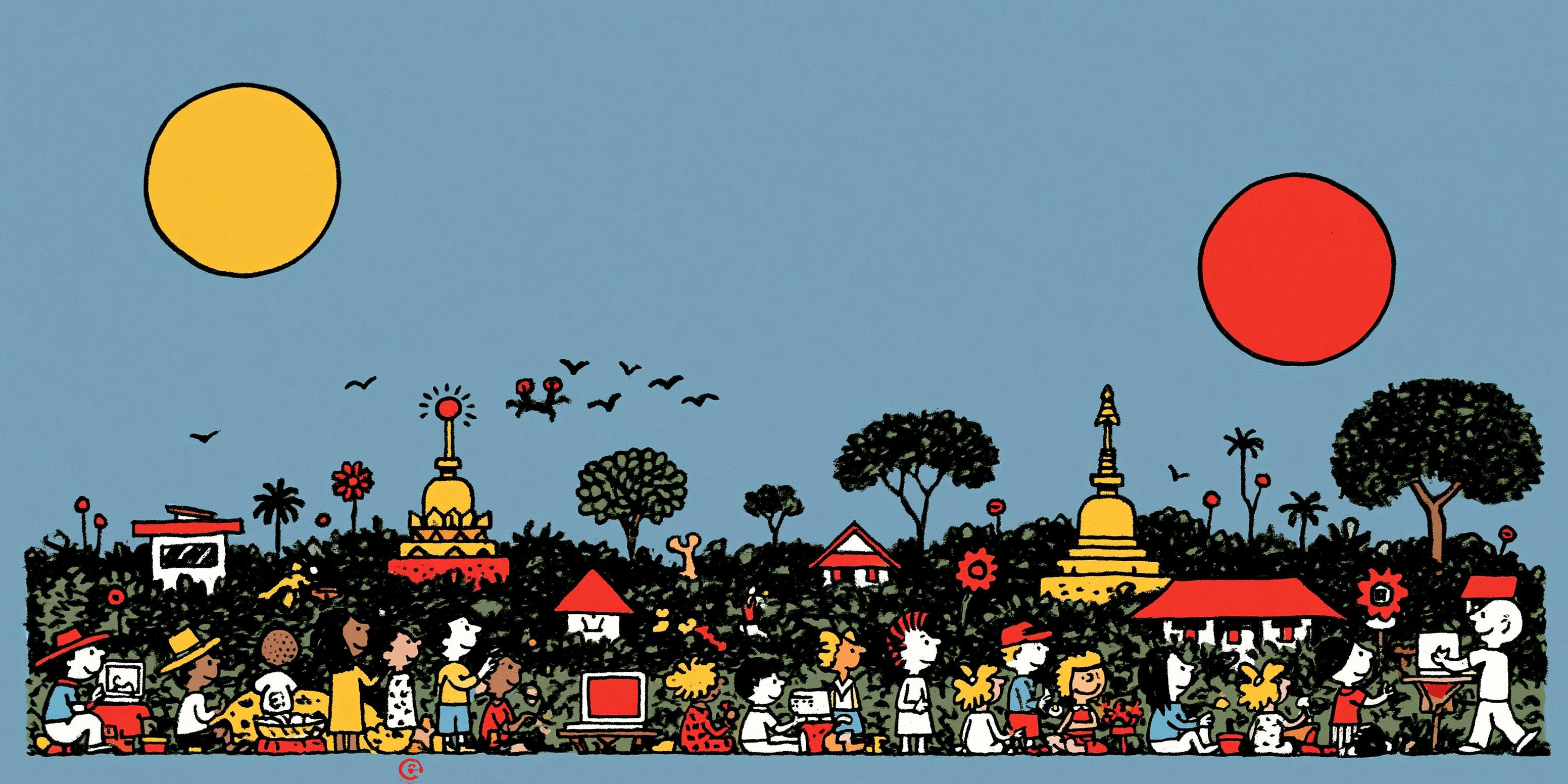
Early morning in Nimman, before cafés open and the afternoon heat makes walking feel heavy, the city can mistakenly feel rural. During early rainy season in the summer, the air is crisp and clean. Lush green mountain backdrops anchor the city’s frame along the northern skyline. Traffic is quiet enough that birdsongs act like nature’s alarm clock.
One morning walk to the gym, I saw what I could only describe as bliss. Across the street from me, a young Buddhist monk in orange palleted robes is carrying a grey basket and walking his dog down a residential street in central Chiang Mai. His orange dress contrasts with the dense, green mountains. His gait steady, eyes holding a curious wisdom. The stillness of that moment I think captures the bliss I’ve been feeling since arriving to Chiang Mai.
Moments like this are easy to forget once the rhythm of daily work sets in, but they are the reminder that you are still embedded in a city with its own deep history, its own pace, its own cultural logic that predates any of the experiments landing here.
Chiang Mai was the seat of the Lan Na kingdom, a civilization with distinct traditions, script, and Buddhist lineage that governed northern Thailand for centuries before Bangkok’s centralization pulled it into the modern Thai state. That history is still physically present: in the moat encircling the old city, in the temple density, in the rhythms of almsgiving and merit-making that structure daily life for locals in ways visitors often miss entirely.
Layered on top of this is a more recent phenomenon. Chiang Mai has become one of the world’s default cities for digital nomads, and the reasons are mostly practical: fast internet, cheap food, walkable neighborhoods, visa accessibility, mild social friction. The Nimman area in particular has compressed an entire nomad ecosystem into a few walkable blocks: coworking spaces, protein smoothie shops, specialty coffee, Muay Thai gyms, short-term rentals. The infrastructure exists and caters to diverse crowds, locals and expats alike.
But a third layer has been building underneath the nomad surface. A growing Chinese diaspora, families who left the mainland for reasons ranging from educational pressure on their children, LGBTQ rights, to general disillusionment with the system they were raised in. Many settled in Chiang Mai specifically: the cost of living, quality of life, growing international school options, the pace is more human, and the distance from Beijing is as cultural as it is geographic.
And a fourth layer, quieter still: pop-up cities, Ethereum events, network state experiments, open-source builder communities. Chiang Mai has become a recurring host for gatherings like Edge City Lanna, Cross-Border Summit, muChiang Mai, ETH Chiang Mai, and others. These events come and go. What they leave behind is a residue of relationships, and permaculture by permanence in a physical node.
These layers coexist but don’t always interact. A Thai grandmother making merit at a neighborhood temple, a Chinese family running an import business near the university, a German developer working from a café on a tourist visa, a Zuzalu popup city organizer scouting venues for the next event: they occupy the same square kilometer of city but move through different social worlds.
Into the overlap between these worlds, an experiment is growing.
4Seas
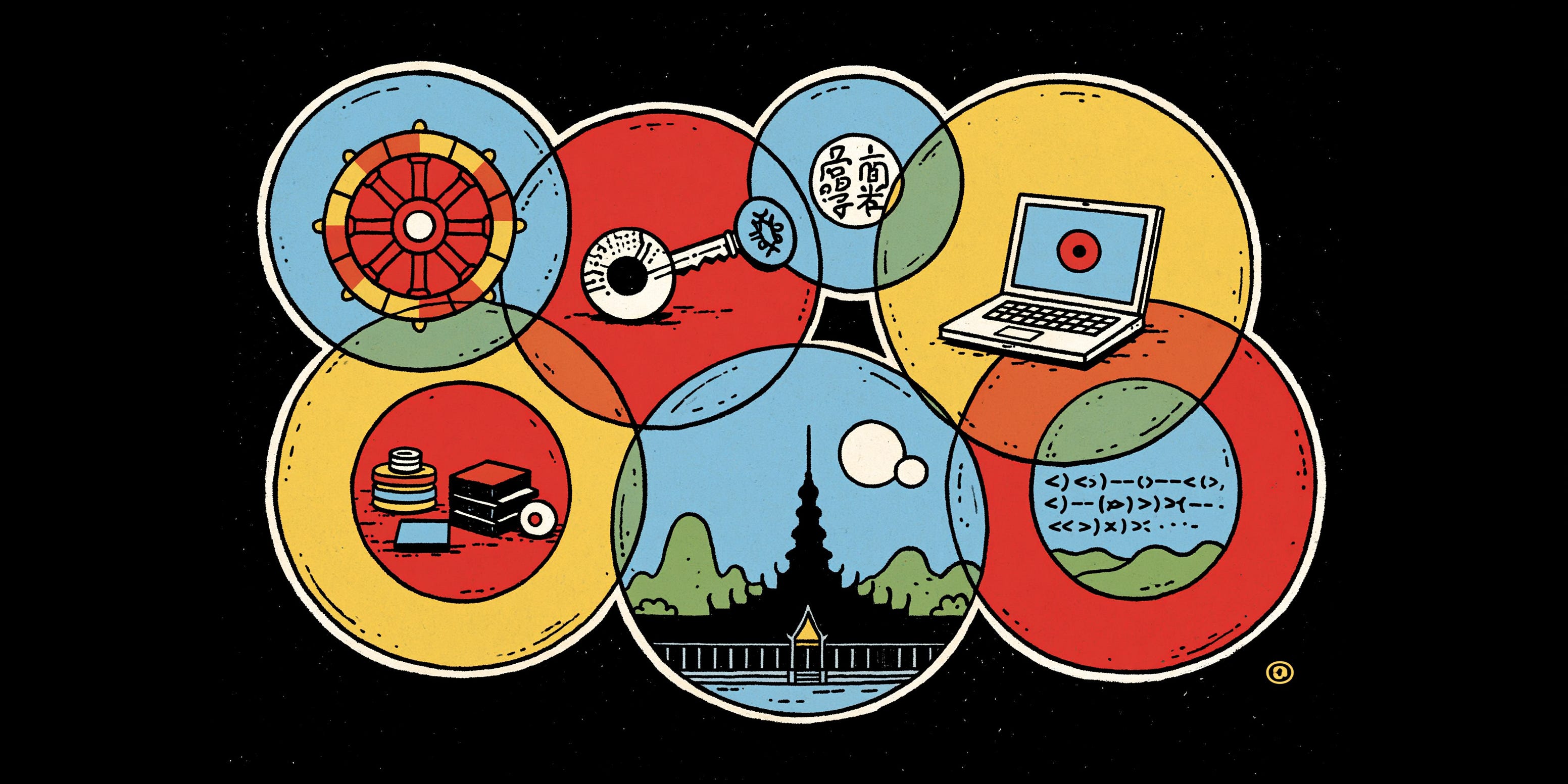
4Seas is a permanent Zuzalu node based in Chiang Mai. It is built on values from the cypherpunk lineage: a counter-cultural hacker tradition that treats strong cryptography as a practical tool for individual freedom. Privacy is not secrecy, but the ability to choose what you reveal, to whom, and under what conditions. Cypherpunks favor encryption, pseudonymity, open-source code, censorship-resistant systems, and peer-to-peer networks because these technologies reduce dependence on centralized institutions. The belief reaffirms that personal sovereignty, over our physical and digital selves, is a human right.
In a Northern Thai context, this alignment is more cultural than it might first appear. Cypherpunk tools support a quieter, voluntary, community-based life: people gathering in local hubs, exchanging trust through relationships, preserving personal boundaries without needing everything mediated by state or platform. The Buddhist resonance is strongest around non-attachment to status, suspicion of hierarchical domination, and the value of intentional community, though cypherpunk individualism sits in productive tension with the Thai and Lan Na emphasis on harmony, merit, interdependence, and social responsibility.
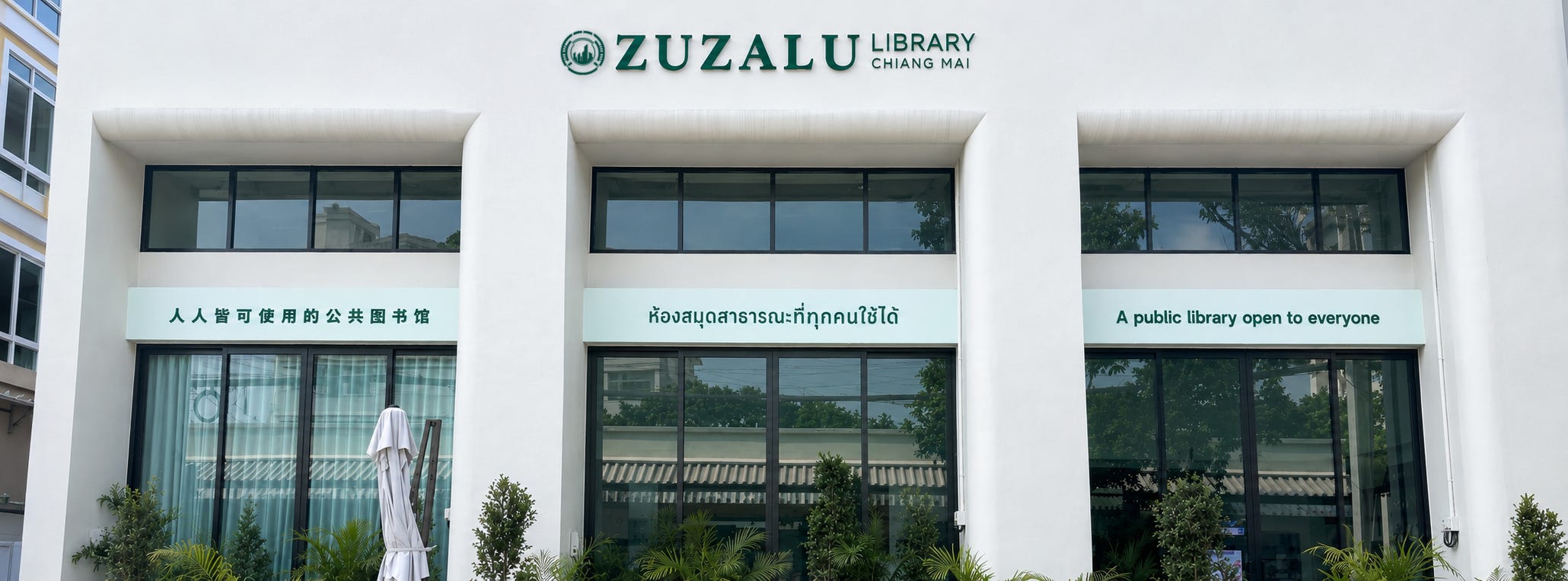
The physical space is in Nimman, Chiang Mai’s densest nomad-friendly neighborhood. Three coworking floors, free and open 24/7, with a café on the ground floor. The Zuzalu Library next door with books in English, Thai, and Chinese. Upstairs, an art exhibition called One Way Function, tracing the cypherpunk movement’s intellectual lineage: Snowden, Assange, the Bitcoin whitepaper, Ethereum. A calendar of events that run the range from useful to atmospheric: language exchanges in English, Thai, Chinese, and Burmese, meditation sessions, AI workshops, community debates, movie nights, badminton. The building is residential too: rooms are available for people who want to live here while they’re in town.
I got pulled in sooner than planned. I intended to visit 4Seas this year, but unexpectedly got accepted into their crypto residency program. In their own words: The 4Seas Residency is a community-based residency program in Chiang Mai for builders, artists, researchers, founders, creators, and long-term thinkers who want to live, work, create, and contribute inside a real community. I was the first recipient. An honor and a guinea pig role simultaneously, which meant walking through unresolved friction points that come with launching a new program: payment logistics, onboarding gaps, the small but important maintenance loops needed to sustain and grow such living projects.
The residency includes a room, a daily meal plan sourced from local partner restaurants, and access to a nearby gym. This last detail highlights the advantage. 4Seas doesn’t build its own gym, its own kitchen, its own childcare. It partners with businesses that already exist in the neighborhood. Meals come from local restaurants the space has built relationships with. The gym is a short walk away. This is a philosophical choice about what kind of node this is: one that plugs into the city’s existing infrastructure rather than constructing a parallel version inside its own walls.
Underneath the experiment is a more conventional operational reality. People are always curious about who actually owns and runs a place like this, especially in a movement that talks so often about decentralization. The unglamorous answer is that any permanent physical node still needs some kind of legal and administrative wrapper. If you want to lease or hold property, employ people, pay bills, manage liability, and operate with permanence, the physical world still requires recognizable scaffolding.
That scaffolding is not the soul of the thing. It is the interface between the experiment and the world as it currently exists. Strip the branding and you find a small place-based operation with an open community front-end. Strip the operation and you find an aligned community with capital, conviction, and taste, trying to make a permanent node of this movement real somewhere. Both descriptions are true at once. The trick is not to let either one cancel the other.
It’s worth noting that nearly every serious experiment in this space still takes this legally necessary step first. A decade into the crypto era, I was hoping structures like DAOs would have made a greater dent here. They have, in some domains. But for the parts that involve property, employment, maintenance, local relationships, and keeping the lights on, DAOs still have not replaced conventional legal infrastructure in any widespread practical sense.
That does not make the experiment less interesting. What sits on top of that scaffolding, is where the experiment actually lives: in the culture, the open doors, the values practiced daily inside a building that a company structure technically owns, but a community actually runs.

Open Doors
The most obvious difference between 4Seas and other experiments in this space is accessibility. There is no membership fee, gate, or scan-to-enter system. In a very “welcome home, you’re in Asia” sense, you take off your shoes at the entrance as you walk in. The coworking floors are open to anyone, 24 hours a day, seven days a week. The library has posted hours but functions in practice as a neighborhood living room where kids, parents, nomads, and locals drift in to escape the heat, read, or work.
Most coworking spaces in Nimman charge a daily or monthly rate. That fee acts as a filter: it selects for people who have decided they need a desk and are willing to pay for it and exclusively lock in. 4Seas removes that filter entirely. The population that walks through the door is broader and more unpredictable than what you’d find behind a paywall. University students from nearby institutions come to study because the space is free and has everything they need. Older adults take a break if they’ve been out too long running errands. Nomads hear about the space from someone at a café. Locals wander in through the library. People come for a community event and keep returning.
Something about the space being free and multipurpose changes how people use it. It’s closer to a house with a coworking layer open to the public than a traditional coworking space. People cook in the shared kitchen, warm up meals, hang out at the communal tables. The vibe has more in common with a university common room than anything corporate. You’re not there solely for the purpose of work, which means the reasons people interact are more varied and more organic. Conversations happen over lunch, during event breaks, on spontaneous smoke breaks, and on the stairs between floors. The spontaneity is the product.
For residents who live in the building, this compounds. I can walk downstairs from my room into the coworking area, see who’s around, make plans on the spot, then walk back upstairs for a nap during the afternoon heat. I can shower, change, and be at an evening event without ever crossing a street. The premium is proximity: living inside the community rather than commuting to it.
Embassy, Not Monastery
At Network State Conference 2025, Vitalik described two models for physical nodes in this movement: the monastery, where a community retreats from the world to build something internally coherent, and the embassy, where a community establishes a presence within an existing society and engages with the local culture around it.
4Seas is an embassy.
The distinction shapes everything: what the space looks like, who walks in, how it sustains itself, what it’s optimizing for.
A monastery model creates its own world. It controls the food, the fitness, the schedule, the social norms. It can iterate fast because the feedback loop is contained. It can develop strong internal culture because the membrane is thick: you opt in, you pay, you commit. Network School is the clearest example of this approach operating at scale, with meals, gym, daycare, coworking, and housing all inside the same campus on a purpose-built island.
An embassy model does something different. It establishes a permanent presence inside an existing city, with all the messiness that implies. It can’t control the surrounding culture. It can’t curate its population the way a gated community can. What it can do is serve as a translation zone: a place where different worlds overlap and where people who don’t quite fit into any single cultural container can find each other.
Which raises the obvious question. An embassy represents a country. What does 4Seas represent? There is no decentralized nation behind it, no flag, no territory. The honest answer is that it is an embassy for a movement rather than a state: for internet-first, tech-forward people.
For Ethereum’s values rendered as something you can sit inside, for the idea that community services can be open, free, and not run through a middleman who can freeze you out. It is a physical node of a network that has no capital city. In the language of the exit essay I co-wrote recently, it is parallel construction made local. Not leaving, not waiting for reform, but building a parallel thing alongside the existing one and letting it earn people over by being good to be in.
The embassy approach means 4Seas doesn’t need to solve food, fitness, or housing from scratch. Chiang Mai already provides those things well and cheaply. What 4Seas provides is the reason to gather, the events that create recurring encounters, the ideological spine that gives the gathering a direction beyond “digital nomads in proximity.” The choice to partner with local gyms and restaurants rather than building those services in-house is an extension of this philosophy. Rather than constructing walls around services, you let the city provide them and direct your energy toward the thing only you can build: the cultural layer.
4Seas is not trying to be a nation or a state. That framing misreads the ambition. The goal as I understand it, is to be a successful, substantive, permanent node: present in Chiang Mai and growing alongside the broader movement. Not imposing itself over the city, but growing with it.
Having a permanent Zuzalu node in Chiang Mai makes geographic sense. The city is already a rotating host for pop-up events in this ecosystem. Where those events are temporary, 4Seas is the permanent infrastructure that remains after they leave. It hosts and supports a lasting post-popup permaculture.
Third Space for a Third Culture
The phrase I keep returning to is this: 4Seas is a third space for a third culture.
Third space: A place that is neither work, nor home. Not fully digital, not fully physical. A hybrid that exists because people who organized online decided to gather in a real location, and the location now supports both modes simultaneously. Community events are listed online and hosted offline. The values of the physical space were shaped by early online cryptographic communities. The library has books in three languages because the community that uses it didn’t come from one country.
Third culture: not fully local, not fully imported. The people who make up the 4Seas community are, for the most part, people who already don’t fit neatly into one cultural container. Chinese families who left China. Westerners who left the West. Nomads whose identity is increasingly defined by what they chose rather than where they were born. Locals who engage with international communities because something about the internet-first, English-speaking, tech-forward default culture resonates with how they want to live. None of these groups are fully at home in the culture they came from, nor have they fully assimilated into Thai culture. They are integrating different cultures into something new.
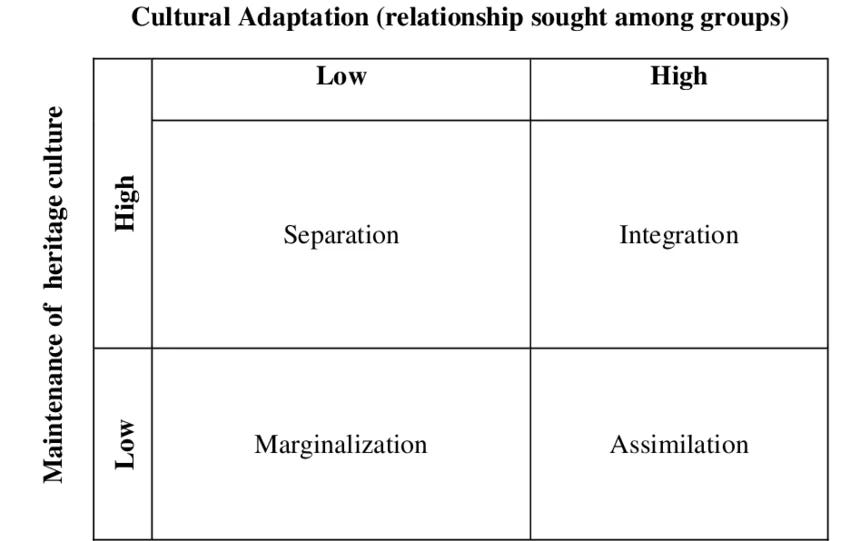
John Berry’s acculturation model (1997) is useful here. Berry mapped four outcomes when people encounter a new culture: assimilation (adopt the host culture, drop your own), separation (keep your culture, reject the host), marginalization (lose both), and integration (maintain your own while also engaging with the host).
What I observe at 4Seas is overwhelmingly integration. People bring their own cultural backgrounds, languages, values, professional identities. They also adapt to the rhythms of Thai culture and Chiang Mai: the sabai sabai pace, the afternoon heat, the temple culture, the food, the quiet. The result is additive rather than substitutive. Identity becomes layered, not replaced.
Over sushi one evening with some friends, the conversation moved from governance structures to the experience of being a third-culture kid. Members of the core team, some of whom are Chinese, described their own position: too Chinese for Thailand, not entirely culturally Chinese either. Parents who brought their children here for a different kind of life. Kids attending international schools in English, surrounded by other Chinese, Thai, and Western families, in a Thai city. Neither here nor there, or maybe: here and there at once.
I recognized something in that description. I left Canada for my own reasons. I don’t feel fully Canadian. I’m not Thai either. Like many people in this room, I carry multiple cultural operating systems simultaneously, and the place where those overlap most comfortably isn’t any one country, but third spaces for a third culture like this one.
What holds the community together, in the absence of a gate or a fee, is an ideological spine. The cypherpunk values: egalitarianism, openness, freedom to transact, privacy, peer-to-peer coordination, ownership of one’s own data and identity. These are the cultural scaffolding imported from the cloud, now manifesting physically.
The spine is strong enough to give the space coherence without being so rigid that it excludes anyone who doesn’t speak the technical language. You don’t have to understand Ethereum to use the coworking space. But the reason the coworking space exists at all, the reason it’s free, the reason it’s open: those trace back to a set of values that came out of the cypherpunk tradition and landed here.
The cypherpunk values are not abstract. The core team runs on what they described to me as a “small head” model: a compact group of roughly equal collaborators who discuss decisions thoroughly before acting, rather than a hierarchy with a single decision-maker at the top. It’s a governance style rooted in coherence and consensus. Meetings are intentional. Decisions are considered from multiple angles before implementation. It’s a form of peaceful, egalitarian coordination: pro-crypto, pro-freedom, pro-privacy, pro-community, grounded in the conviction that the people closest to the work should make the calls together.
Sabai Sabai
I write about the psychology of new societies. My background before this was in mental health. That training doesn’t switch off when I walk into a community space. It means I notice things about how people relate to each other, about what the environment does to bodies and behavior, that a governance researcher or a tech journalist might not foreground.
The simplest observation: my nervous system slowed down here.
The physiological state I carried with me from Canada, from years of urban vigilance, social scarcity, avoidance, a kind of low-grade defensiveness that becomes so constant you stop noticing it, that state changed. Simply through deliberate change in environment.
In that sense, Chiang Mai does most of the work. The pace of life is slower. The cost of living reduces financial anxiety from daily decisions. The mountains are visible. The sounds of temple bells, the unhurried pedestrian rhythm of the Nimman neighborhood: these are the sensory context where my body recalibrated. The Thai phrase for this is sabai sabai: a state of ease, comfort, contentment. It’s not something you decide to do. It’s something the city does to you if you let it.
4Seas amplifies this. The absence of financial barrier-to-entry means no transaction precedes every interaction. People are there because they want to be; affordability is no hindrance. There’s room for genuineness. The flat hierarchy, collaborative energy of the core team reads in the social texture of the space itself. People are warm. They’re curious. They communicate openly. The cultural backdrop of Chiang Mai is a bed of mutual safety and surrender. There’s a flow to life, work, and meaning that 4Seas itself is capturing and fostering with its own cultural flavor.
I’ve been told during my stay that I come across as an extrovert. I lean heavily introverted and have for most of my adult life. I suspect what has changed, is the environment reduced the cost of social engagement enough that I stopped rationing myself.
The “learn, burn, earn” model that Network School uses explicitly appears to be emerging organically across different nodes in this space, including here. Health, community, and productive work as the three pillars of a well-functioning default day. At 4Seas, nobody mandates it. The city and the space just make it easy: walk to the gym in the morning, work from the coworking floor, attend an event in the evening, eat well, and sleep upstairs in the same building, or nearby in one of 4Seas’ apartments. The loop builds itself once the infrastructure exists.
Digital & Local Growth
4Seas has been operating for about three years. It’s serving a genuine need, and like with all experiments in this space — it’s also still early.
The biggest gap is local visibility. People in the online Ethereum and network state ecosystem know 4Seas exists. It appears on dashboards, gets mentioned in newsletters, attracts nomads and builders through digital channels. The local Chiang Mai population, Thai residents and business owners and students who live a few blocks away, are still discovering what this place is and its offerings.
It is certainly unique in offering a free coworking space with a cypherpunk art gallery next door.
The demographics on any given day lean toward English-speaking, tech-forward, internationally mobile people: the same population you’d find at many Nimman coworking spaces, plus a meaningful Chinese contingent that reflects the core team’s background and the broader Chinese diaspora in Chiang Mai. Local Thai participation exists, but is thinner but growing steadily.
Growing that local engagement, perhaps through partnerships with universities or digital literacy programs, feels like the next frontier. Some of that work is already organically happening. Students from nearby institutions come to study in the space because it’s free, air conditioned, and equipped. Expanding those pipelines could meaningfully broaden who 4Seas serves and help with local cultural integration.
The crypto residency program is brand new and still finding its shape. I’m the first recipient, which means the operational details are being built alongside my experience. The team is actively iterating on the model, working toward something that can reliably attract international talent, give them a meaningful stay, and convert that energy into lasting contributions to the community. Getting this right could become one of 4Seas’ strongest growth engines.
If you feel pulled to 4Seas and want to contribute through the residency program, you can learn more here. If do you apply, tell them Michael from Parallel Citizen sent you.
Convergence & Emergence
What makes me personally bullish on 4Seas is not any single feature of the space, but the convergence of cultures and the emergence of a new communal function.
Consider the values that overlap in this building on a given day. Buddhist non-attachment and the cypherpunk rejection of centralized authority share a root suspicion of power concentrated in the wrong hands. The Chinese diaspora families who chose Chiang Mai for a freer life and the Western nomads who left their home countries for similar reasons, are making the same bet from different starting points. The open-source ethos of building in public and the Thai communal tradition of sharing resources both point toward collective benefit without coercion. Pro-technology and pro-community are not in tension here the way they often are elsewhere. Instead, they are woven into the same cultural fabric.
This convergence isn’t designed top-down. Nobody wrote a manifesto that says “Buddhist values plus cypherpunk philosophy plus diaspora resilience plus digital nomad pragmatism equals 4Seas.” It’s emerging bottom-up, from the specific mix of people who keep walking through an open door in Nimman. The culture is forming in real time, shaped by whoever shows up and what they bring.
This is what I mean by a third culture. Not a rejection of any existing culture, and not an attempt to replace local Thai life with an imported Western or Chinese or crypto-native alternative. An additive layer. A new thing growing in the spaces between existing things, drawing from all of them, identical to none of them. People bring their Buddhism, their Mandarin, their JavaScript, their trauma, their curiosity, their chai preferences, their legal training, their garden projects. They bring whatever they carry. And the space, because it asks for nothing at the door, lets all of it in.
The success of 4Seas, as I understand it, won’t be measured in diplomatic recognition or governance innovations or the kind of political leverage that network state theory tends to foreground.
It’ll be measured in something simpler: entrenchment. More apartments in the neighborhood occupied by people who came for the community. More partnerships with local businesses. More recurring events that locals and internationals attend side by side. More students from Chiang Mai universities building projects in the coworking space. More pop-up events choosing Chiang Mai as a host city because the permanent infrastructure is already here.
The vision I see forming is one where, in a few years, some people start coming to Chiang Mai specifically because 4Seas is here. And others discover 4Seas because they came to Chiang Mai and wandered in through an open door. Both paths lead to the same room. And enough people staying, returning, eventually creates a culture that is distinct, visible, and self-sustaining: not a nation, not a state, but a permanent, growing, substantive node in a real city, built alongside the city’s own growth, not imposed over it.
The internet gathered these people. Chiang Mai is where they’re becoming each other’s neighbors.

Support the Blog:
Decentralized Social Media 101: A Creator Flywheel. I’ve made a step-by-step guide with everything you need to set up and interoperate Farcaster, Paragraph, and Zora in one sitting.
Sponsor:
YODL Pay - Go global. Pay local. Use crypto in currencies around the world