

I spent a month at a pop-up city in Japan this summer. This piece comes out of that month and earlier conversations in Chiang Mai with Kiba Gateaux of ZuCity Japan and my friend Jane, who has a home in Japan and is part of the ZuCity community. This is a sister piece to TOKOWAKA, by my friends Ryu and Seiko of 369Meteor. We came away with different but overlapping questions about culture, belonging, and what it takes to build places worth caring for. Their article explores these questions through craftsmanship, Japanese heritage, and the community they hope to create.
Japan is the most futuristic country I’ve lived in, and also the most haunted by its own past. The trains run on time, the food is cheap and good, and the streets are safe at 2AM. It also has more empty houses than it knows what to do with, and fewer newborns every year.
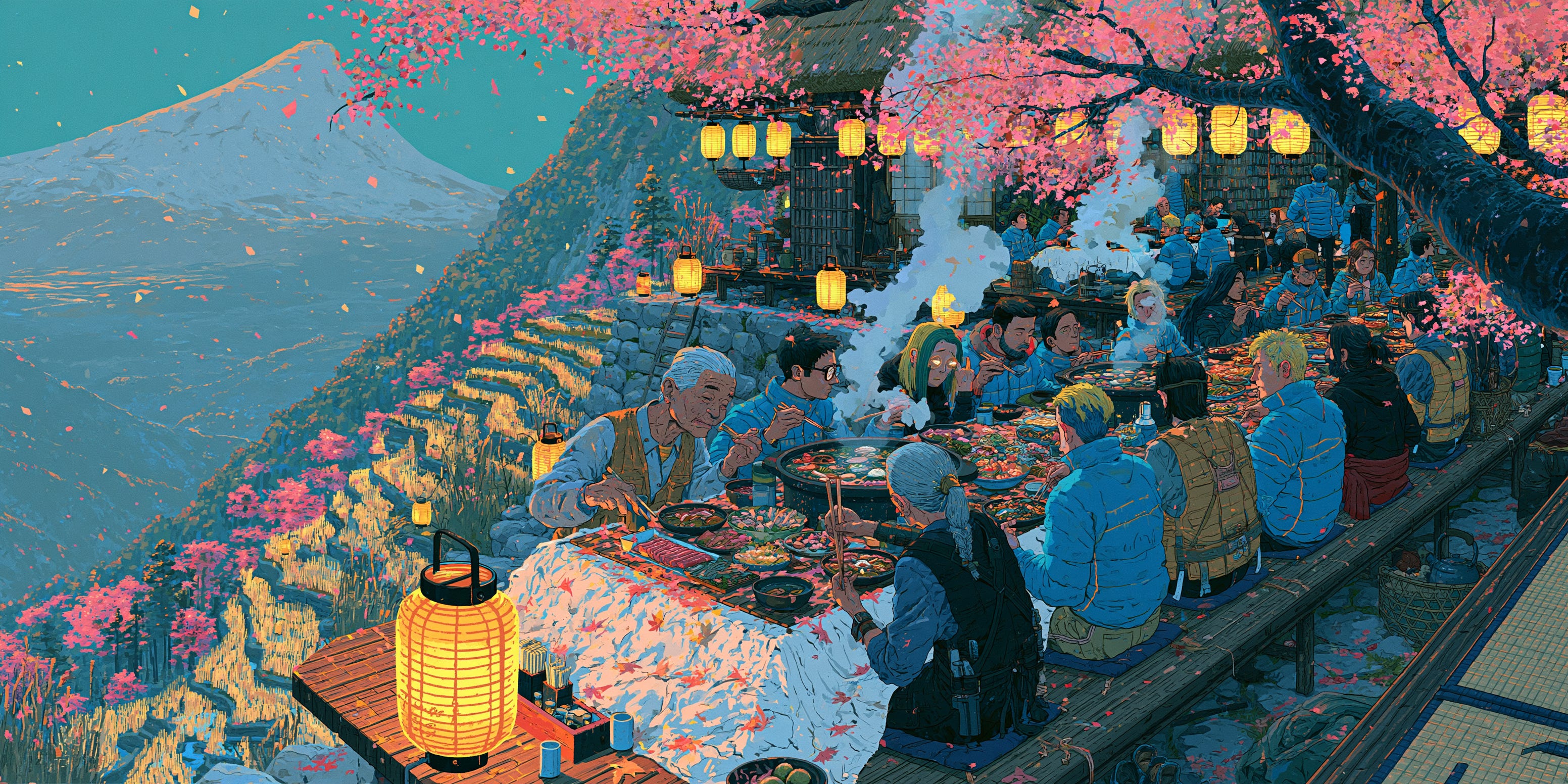
The Future, Already Built
Parts of Japan feel almost post-capitalist
Walk around any Japanese city and you notice how much of daily life is simply handled. A decent meal costs less than a coffee in San Francisco. Public transit reaches almost everywhere. Residents are covered by national health insurance since 1961, and Tokyo has kept building enough housing that rents never exploded the way they did in London or Vancouver.
Being poor in Japan still looks very different from being poor in most rich countries. That doesn’t mean poverty is rare. Japan’s relative poverty rate was 15% in 2021, well above the OECD average of 11%. It’s just quieter, spread across pensioners, single parents and part-time workers who still ride the same clean trains and use the same working civic infrastructure.

Plaza, 1985
The deal that still shapes how Japan sees its autonomy
In September 1985, the five largest economies met at the Plaza Hotel in New York and agreed to push the dollar down. The yen roughly doubled in value over the next few years. Japanese exporters took the hit, the Bank of Japan cut rates to cushion it, and cheap money poured into land and stocks. The Nikkei peaked at the end of 1989 and took 34 years just to regain that level on paper: the lost decade(s). The broader economy never fully recovered.
My read is that Japan’s options in this period were shaped heavily by Washington. The Plaza deal, trade fights over cars and chips, and a security umbrella Japan couldn’t afford to lose all narrowed what Tokyo could say no to. The economist Jeffrey Frankel and others argue the timing doesn’t fit a story where Plaza caused the lost decades, and that domestic policy during the bubble mattered more. I think both can be true: the pressure came externally from Washington, and many of the choices made internally in Tokyo were molded by it.
The Long Flatline
Thirty years of low rates, growth, and risk
What followed the crash was three decades of near-zero interest rates, falling prices, and companies sitting on cash. Lifetime employment slowly frayed, but the risk aversion it trained into people stayed. When the economy lets down an entire generation, avoid risk and playing it safe becomes a sensible life strategy.
That era may soon be ending though. On September 1, 2026, Japan’s 10-year government bond yield hit 3% for the first time since 1996, as part of a wider global bond selloff. Gross public debt sits around 240% of GDP. And Japan’s rates move money far beyond Japan: in August 2024, trades funded with cheap yen unwound and the Nikkei fell about 12% in a single day.
Flat growth is relatively manageable only for so long, and really only possible if interests are near-zero, or even negative. But no growth spells trouble when the cost of borrowing reverses that trend.

Hanko, Fax, Cash
Why a high-tech country stays analogue
Japan builds bullet trains and elder-care robots, yet plenty of offices still run on personal seals, fax machines and cash. I think this is what thirty years of low risk looks like at the level of paperwork. If a process still works, why change it?
Sometimes, the result is charmingly absurd. At a gym in Osaka, I witnessed a whiteboard next to the free weights asking me to write my name with check-in/check-out times, with a 20-minute limit per person. I was told I could workout longer, so long as the gym wasn’t busy, and I would have to go back and update the time on the whiteboard…
The state knows its flaws, but the process of how things get done, seems to supersede the outcome of getting it done efficiently in the first place. Japan’s Digital Agency only finished scrapping the last of 1,034 regulations that referred to floppy disks in 2024. Change comes, but it comes once there’s broad consensus that it’s safe, and usually from the top down.
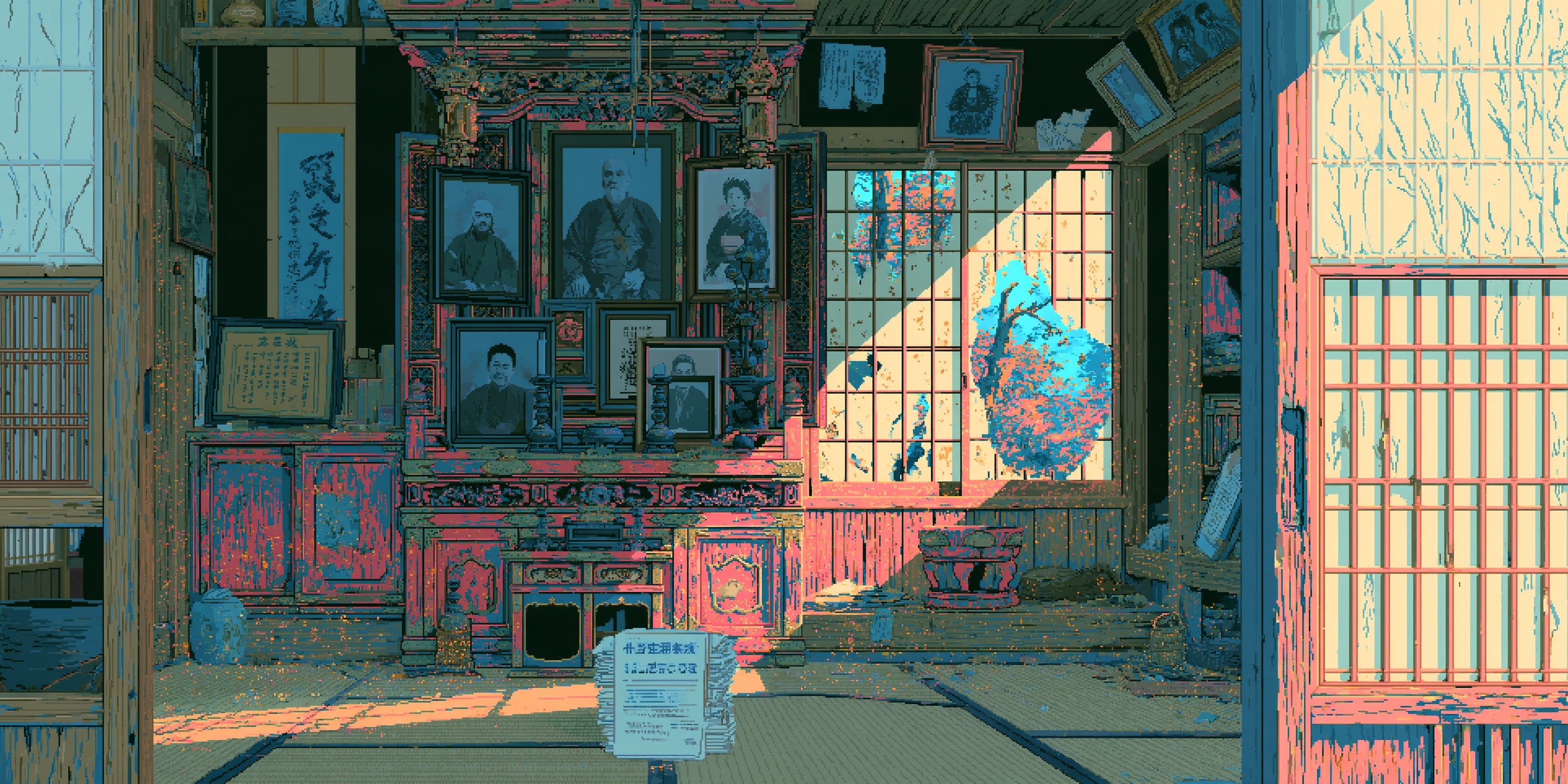
Houses Looking for People
The demographic backdrop
In 2025, Japan recorded about 671,000 births and 1.59 million deaths, a natural decline of roughly 918,000 people in one year. The fertility rate fell to 1.14. Adult diapers have outsold baby diapers here for over a decade, and in 2024 one major maker stopped making baby diapers in Japan altogether.
The houses tell the same story. The 2023 housing survey counted 9 million vacant homes, ~14% of the total. About 3.9 million of those aren’t for rent, for sale, or used as holiday homes. They’re just empty, often rural and old and tangled up in inheritance. Japan has houses looking for people, and the internet has people looking for a place.
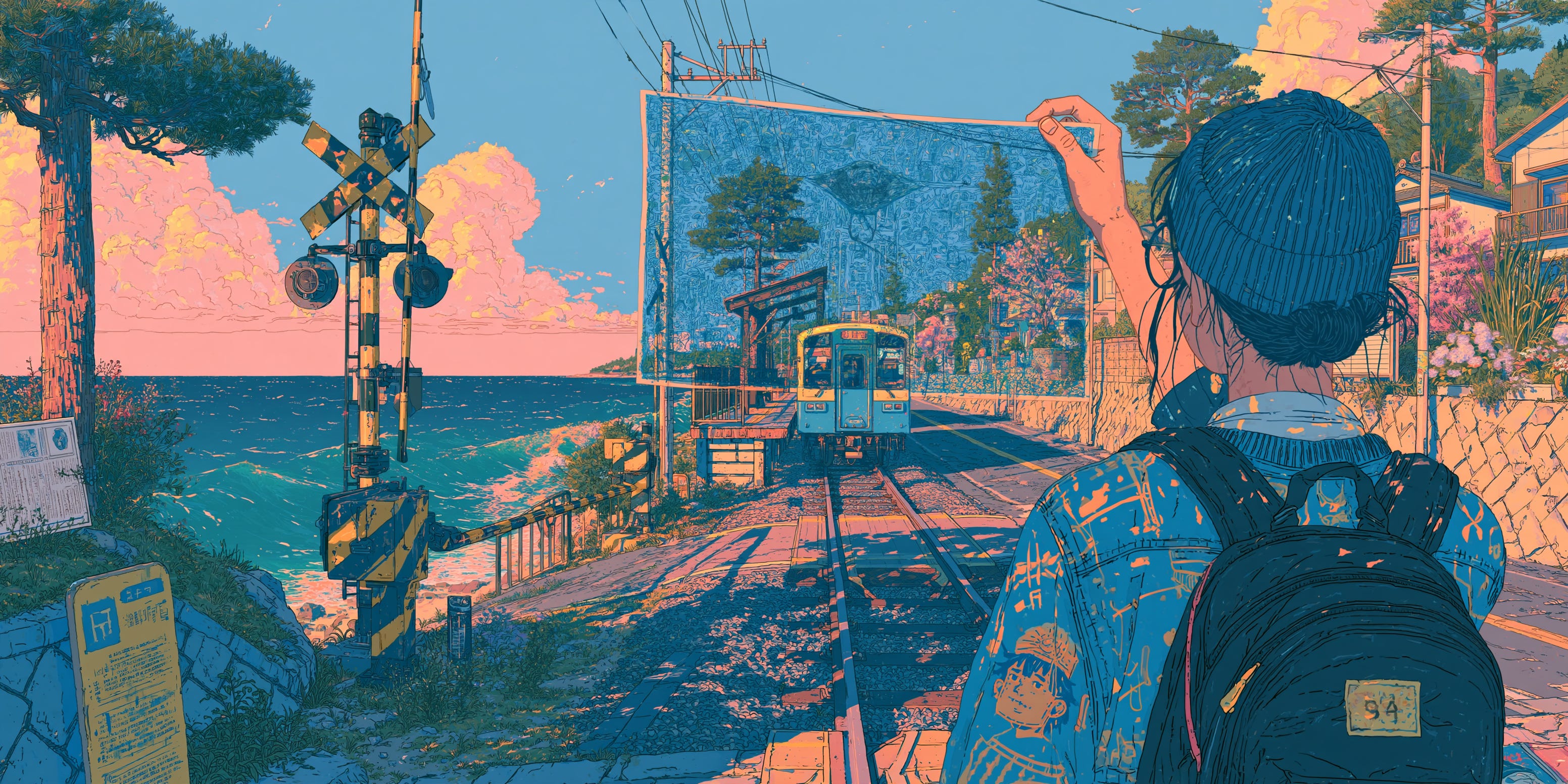
Oshikatsu
Belonging through devotion
An oshi is the idol, athlete, anime character or VTuber one endearingly choses to support. Oshikatsu is everything that grows from that choice: buying the merch, going to the events, and travelling to places your oshi has been. One 2025 survey estimated around 14 million participants in the movement, spending about ¥3.5 trillion a year.
Anime fans even have a word for visiting real locations from a show: seichi junrei, pilgrimage to sacred sites. A railway crossing becomes holy ground because a story put it there. That’s network (culture) first, and territory (land) second, which is roughly the order the network state book describes; applied to a concept outsiders would consider extreme levels of fandom.
Hikikomori, Kodokushi
The same society, turned inward
A government survey in late 2022 estimated about 1.46 million working-age people living in prolonged social withdrawal. Around 2010, an NHK series popularized the phrase muen shakai, “society without ties,” after reporting on people who lived and died alone, with no one to claim them. Hirschman argued that people facing a failing institution have two basic options: exit or voice. Hikikomori looks to me like exit without leaving the country, a withdrawal from school, work and social life by people whose economy and politics let them down.
It isn’t freely chosen exit in the network-state sense. It’s what exit looks like when there’s nowhere better to go, and where one has no voice in their society, and no loyalty to the state.
The old scripts of company, marriage and family got harder to follow after the economic bubble burst. Stable jobs thinned out, marriage rates fell, and a generation grew up learning to want less.
Japanese media even nicknamed them the satori sedai, the “enlightened generation,” for not craving cars, careers or romance. Fewer new scripts replaced the old ones, so you get a country that is tech-forward and comfortable, where a lot of people are quietly stuck between developmental stages of life.
At the end of life is kodokushi, a more recent phenomena reflecting elders dying alone: about 77,000 people were found dead alone at home in 2025, and more than 20,000 of them weren’t discovered for over a week. This sadly reflects the isolation and lack of societal integration faced by the older generations.

Affinity vs. Obligation
Why shared interests don’t make a community
Put oshikatsu next to hikikomori and kodokushi, and a pattern shows up. Japan has perfected ways to belong to something at a distance, and fostered a normalcy in isolation. You can share an obsession with a hundred thousand strangers and still have nobody notice when you stop showing up. Affinity scales easily over the internet, and sometimes in real life, but obligation doesn’t.
Economists have a name for a close cousin of this: the principal-agent problem. The people who pay or decide (principals) aren’t always the people doing the work (agents), and their interests drift apart unless roles are spelled out and enforced.
In this vein, popup cities, network state experiments, and other intentional communities can make the mistake of stacking these roles on top of each other: guest, participant, community member, stakeholder, owner, each with different rights and duties. When people slide between them without saying so, a paying guest ends up washing dishes and an organizer ends up serving customers instead of building community. Resentment follows, even among people who otherwise like each other.
There needs to be a balance between affinity to the tribe, community, moral innovation, and obligation towards that group in showing up and taking care.
“That’s Difficult”
How “no” sounds in Japan
My friend Jane described Japan as sharing Norway’s consensus culture, just with a lot more rules. Her advice for newcomers was simple: watch, copy, learn the etiquette, learn some of the language. In Japan, “that’s difficult” or “let’s discuss it later” often means no. An outsider hears an obstacle and keeps pushing, and what feels like initiative reads as disrespect.
People who pay a personal cost to follow shared norms tend to resent newcomers who ignore them. Exclusion here is rarely loud. It shows up as paperwork that stalls or a neighbour who stops helping. Owning land doesn’t buy you cooperation. The same cultural norms also produce the calm and predictability that draw so many expats and foreigners to Japan in the first place.
Working with silence, reading the room, attuning to the cultural fabric in this way, is highly important for new communities and projects attempting resolve and innovate in governance and living, within societies like Japan.

Land First
The network state in theory, and in practice
Balaji’s book lays out an order of operations: build the community online first, and get land last. Last, not never. In practice the order seemed flipped. Network School needed a physical campus in Malaysia before it could become a real community. On July 21, 2026, the local council in Iskandar Puteri revoked its business license. The next day, Balaji signed a five-year MOU with Kazakhstan’s Ministry of Artificial Intelligence and Digital Development.
The lesson I take is that permanence starts with land and a working relationship with the host state. Only then can you recruit from the cloud at scale. Cloud and land go together, but securing land is a legitimizing first step. Malaysia showed that land without local legitimacy can disappear in a week. Japan’s version of that lesson: land is surprisingly easy to buy for foreigners, and legitimacy is not.

Lessons from a Month-Long Pop-Up
What I learned about roles
This August I spent about a month at a pop-up city in Japan. After Network School’s forced move from Malaysia, many community members forked to rural Japan, so it felt like the same culture continuing in new mountains. Same faces, in-group banter, and late-night debates about political will and sovereignty. The nature was beautiful and I left with real friendships.
It also taught me how fast roles blur. An amenity that exists on a pitch deck isn’t the same as one that works when you have calls to take. When guests start doing chores and staff start covering jobs outside their role, nobody is sure who owns, and owes what.
Guest, participant, stakeholder, owner: each is a different implicit contract.
Jane had warned me months earlier about the usual arc: a founder starts something, carries it, burns out, and the project dies unless others intentionally take on the work. The fix is boring and necessary: clear roles, clear expectations, and taking care of the people who do the invisible work.
She also gave me a framework for this, borrowed from Adam Grant’s Give and Take. Givers help others, often at their own expense. Takers capture credit and resources. Matchers, most people, mirror whatever they see around them.
Places like this run on givers doing invisible work, and when that work goes unrecognized, givers burn out and matchers start keeping score. Her sharper point was that keeping takers out matters more than recruiting saints, and that founders need to protect the givers before the whole culture tips.

Zuzalu Doesn’t Exist
One pop-up became a scattered family of nodes
Kiba likes to say Zuzalu doesn’t exist. The original 2023 pop-up in Montenegro happened, but there’s no single place, channel or event today through which you could reach that same community or capture the ethos and magic of that event.
Its people carried the format everywhere: Zuitzerland, Zu-Grāma, ZuAfrique, ZuThailand and more. A few became permanent. 4Seas in Chiang Mai calls itself a permanent Zuzalu hub, Frontier Tower in San Francisco a Zuzalu-inspired vertical village, and ZuCity is Kiba’s own experiment in Komoro, Japan.
His sharper point is that most pop-ups are experiential tourism. You pay for a curated month with interesting people, which can be worth a lot. Then everyone goes home. Pop-ups help you find your people, but they rarely give you somewhere to live with them. In that vein, I think what Kiba is doing in ZuCity is special: building and proving a direct path to ownership and community, where transience is otherwise the norm for pop-up experiments around the world.
Komoro
A network looking for a village
Komoro is an old castle town in Nagano under Mount Asama, about 90 minutes from Tokyo. ZuCity started there with a first house in early 2024, next to another project called Akiya Collective, a non-profit turned social R&D hub which restores abandoned homes for artists, scientists, and creators. ZuCity now has three restored houses, a venue for about 120 people, coworking and gardens, and ran its annual pop-up this year from September 4 to October 5.
Kiba didn’t set out to build a town. He planned to buy one house, and friends said they’d buy nearby. Most didn’t. Moving to Japan felt normal to him after years of familiarity, but for them it meant rebuilding a life. A cheap house doesn’t remove that friction, and owning one doesn’t come with a visa.

The Neighbour Effect
Real estate as coordination
Kiba’s core idea is that real estate coordinates people better than governance software. Neighbours bump into each other, share demand for cafés and services, and give the next person a reason to move in. Even a rival project next door helps, because it draws visitors and raises the value of his house. ZuCity says it isn’t a DAO and that each member owns their own home. A few spare rooms let friends visit; ten to twenty beds let you run events that pay for themselves.
You don’t have to join anything, either. You can own a house nearby, live your own life, and plug into the community as much or as little as you like.
Governance follows the same logic. His house runs his way, and if you disagree you can buy one down the street for roughly the price of a used car. I find that more honest than on-chain voting by people who’ll never do the work. When a house costs less than a used car, exit stops being theoretical.
My caution is around mass coordination and converting that community-living energy into some form of compliant political will. Showing locals that the intention is to collaborate in revitalizing rural towns across Japan, while also coordinating internally to scale and execute with the community’s needs in mind.
The catch is that if this model works, prices can rise, and the cheap exit that makes the model fair starts closing for whoever arrives next. An odd tension of success for small projects that begin to scale past Dunbar’s number.

Software Nobody Sees
AI, shared infrastructure, and crypto that stays out of the way
Kiba built ZuCity’s booking system part time over about six months with AI coding tools. Any independent property manager can use the shared contract without paying him a fee. A guest pays in normal money, the manager issues an on-chain receipt, and the guest checks in with a QR code. They never touch crypto.
This is the AI story that matters to me more than any national strategy. One person, part time, can now build infrastructure that used to need a development shop. The Japanese government is trying too: this year it began piloting an AI system called GENNAI with about 180,000 civil servants. A pilot isn’t adoption, but the cost of trying new things is falling for small teams and ministries alike, and my hope is that Japan and other countries learn to adapt to these tools as fast as they are evolving.
Japan’s Own Nomad Map
The experiments English speakers don’t see
Most of Japan’s experiments in location-free living are advertised in Japanese, so the network-state crowd rarely hears about them. ADDress runs a housing subscription across roughly 300 homes, many of them renovated vacant houses, each with a local steward called a yamori. It started accepting international remote workers this spring. LivingAnywhere Commons, run by the property company LIFULL, passed 50 coliving bases in 2022, and HafH runs a similar network. In Kamiyama, a town of about 5,000 in Tokushima, satellite offices and a new technical college opened in 2023 have slowed population decline. Colive Fukuoka hosts one of Asia’s biggest nomad gatherings every autumn.
The state has its own vocabulary for this. Kankei jinkō, or “relationship population,” means people with ongoing ties to a place they don’t live in, and the government wants 10 million of them within ten years. Furusato nōzei, the hometown tax, let people collectively send ¥1.27 trillion to towns of their choice in fiscal 2024. Partial, chosen belonging is already official policy.
For foreigners, Japan launched a digital nomad visa in 2024 and has its own startup visa pathways (though they’ve been met with their fair share of criticism).
Yamakoshi
A village looking for a network
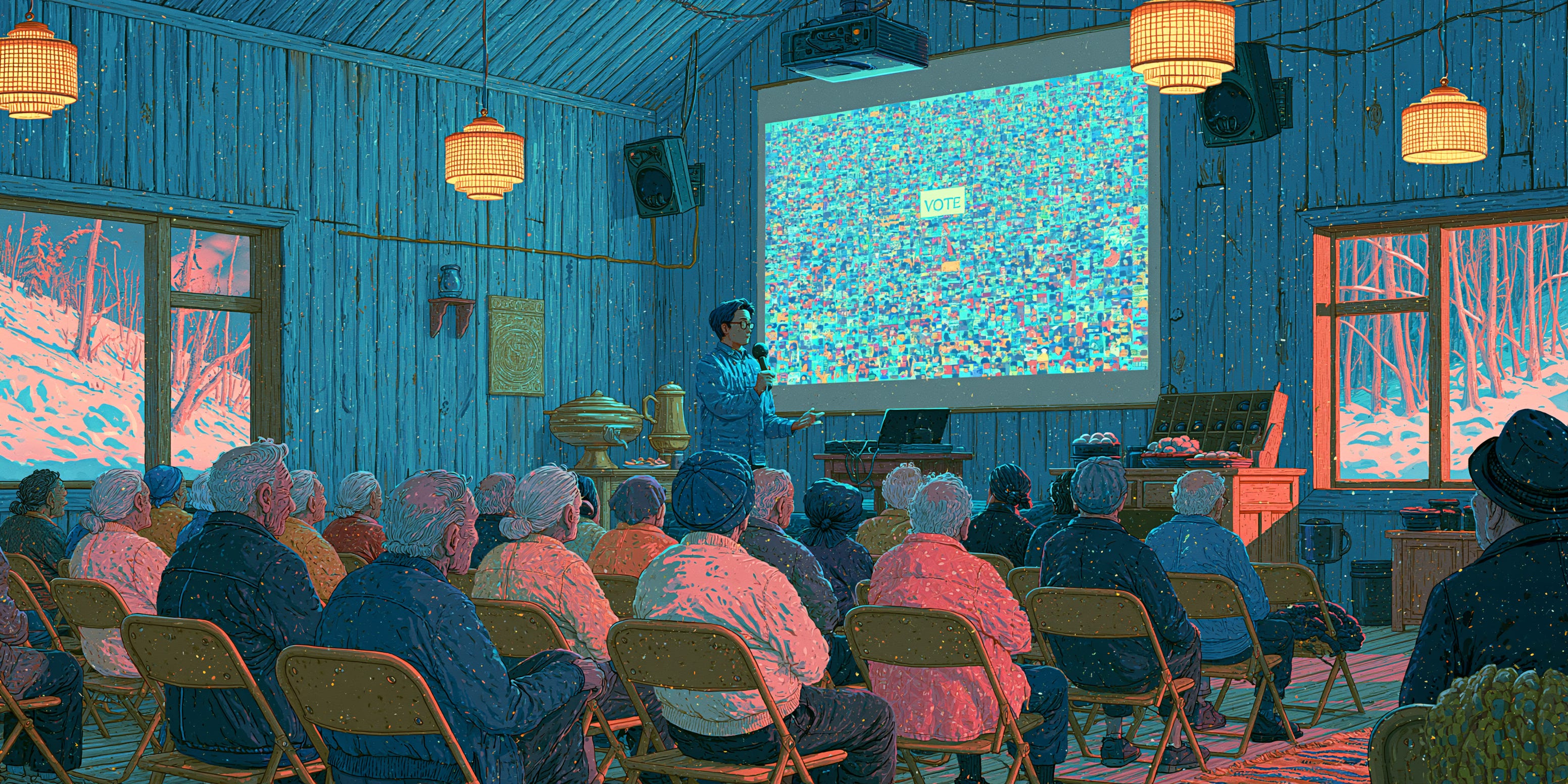
Yamakoshi is a mountain district of Nagaoka in Niigata with about 800 residents. In December 2021 it started selling NFTs of Nishikigoi carp, the fish the area is known for. Holders became “digital villagers,” soon outnumbered the people living there, and voted on how part of a budget was spent.
It’s still running. In 2024, digital villagers voted to expand the model to Tenryukyo in Nagano and Shiiba in Miyazaki, and the project was still holding events in late 2025.
ZuCity in Komoro, is a network that went looking for a village. Yamakoshi is a village that is looking for a network.
A Japanese Fork
Network nation, not network state
I echoed AGM and raised a question I keep coming back to: would anyone die for a network state the way people die for a nation? Probably not yet. Most Japanese people already have a national identity they’re content with, rooted in language, history, family and place.
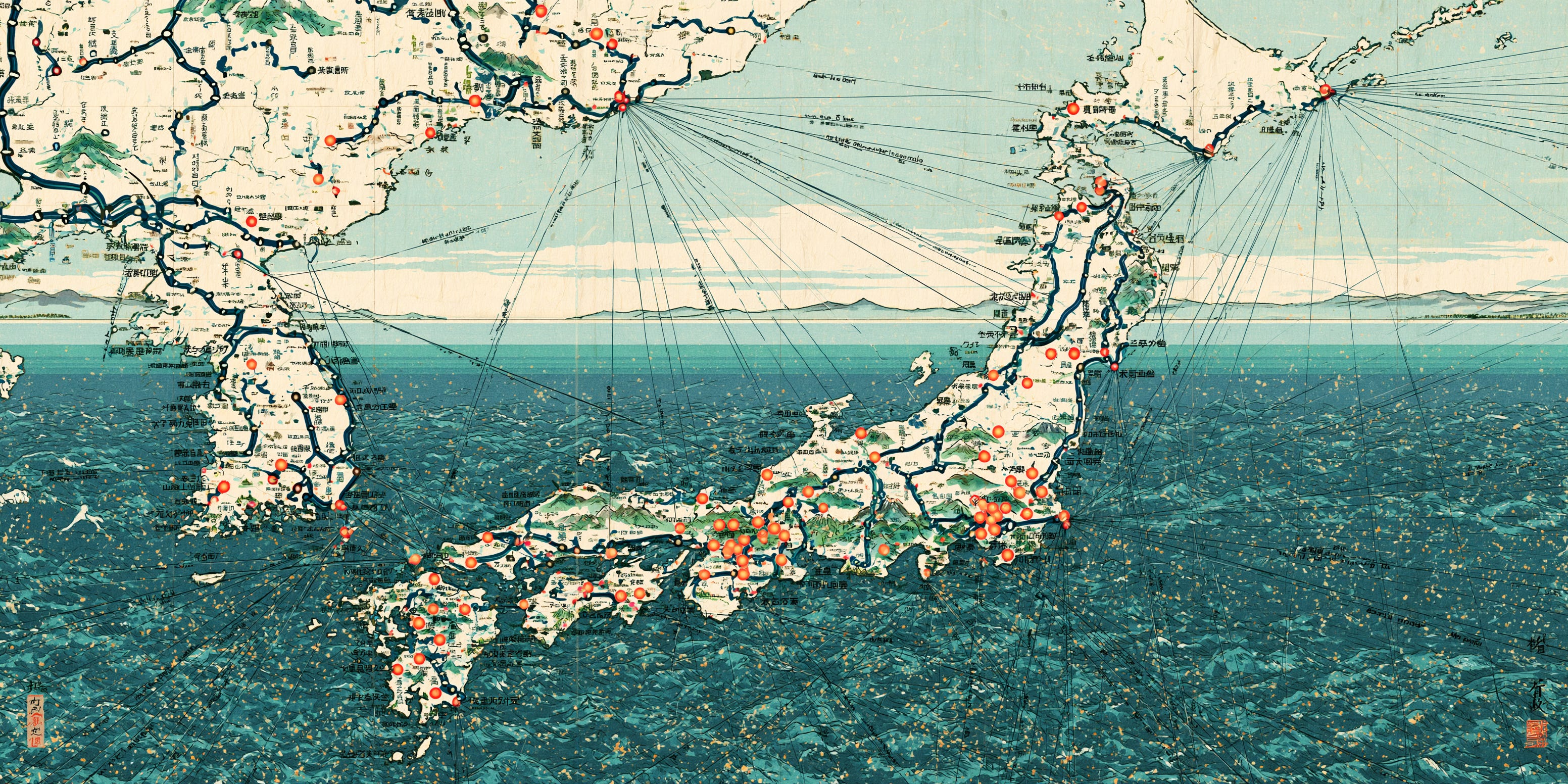
But there’s always a hunger for better institutions. That points to a Japanese fork of the movement: a network nation of domestic nodes, linked to each other internally, and to nodes abroad like 4Seas, Frontier Tower, and Network School. Same friends, same tools, same circuit, running through Japanese towns.
ZuCity has a name for the energy behind it: jp/acc, Japanese accelerationism, which got its own week at this year’s pop-up. Taiko Aki, who is building ZuCity alongside Kiba, lays out the thesis in Modern Meiji Restoration on JPY2: Japan has reinvented itself at breathtaking speed twice before under existential pressure, and AI, nuclear, biotech and crypto could make it a third time. Their pop-up recap is worth reading too, for how the model pays for itself.
For this model to work, in a culture this cautious, the idea has to meet the culture. It can’t arrive as exit or disruption. It has to be retrofitted into what already exists: machizukuri (community town-building), kankei jinkō (relationship population), akiya renovations, local cultural festivals, compatible values, and cultural integration. Japan doesn’t need replacing, but the movement’s ideas need translating into Japanese.
In John Berry’s model of acculturation, integration needs a host society willing to be changed by newcomers too. Japan absorbs foreign ideas on its own terms, but it rarely lets newcomers change it. So the realistic path is closer to what Berry calls assimilation: people who adopt the culture and plan to stay.
Future projects must necessarily fit the movement into the culture, without trying to replace the culture, especially in an insular culture like Japan.
Bullish Japan
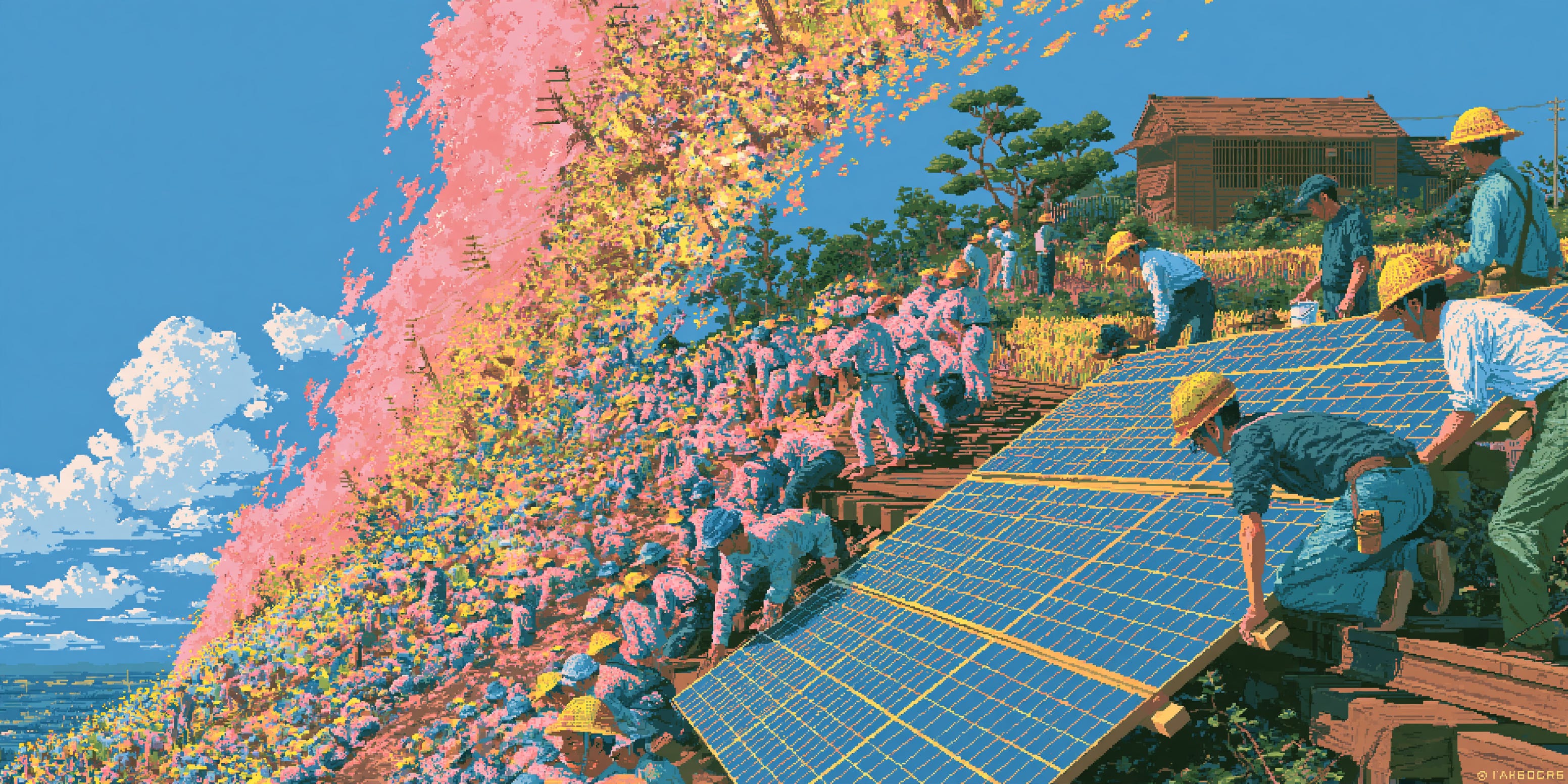
The raw material is unusually good. Houses are cheap, foreigners can still buy them, and the state already has policies for part-time belonging and remote workers. Daily life is safe, affordable and well run, which matters more to most people than ideology. AI is making small-team infrastructure cheap. And fandom has already shown that Japanese networks will travel to a place they love.
There’s also a cultural fit people underrate. Japan already practices shared baths (onsens), neighbourhood festivals, and group clean-ups. Collectivist cultures tend to orient decision-making and growth for the group, over the individual.
A node that joins those rituals instead of inventing its own could settle in faster here than in most Western towns. And the country’s problems are exactly the ones these projects claim to solve: empty houses, lonely people, and towns that need new residents.
Bearish Japan
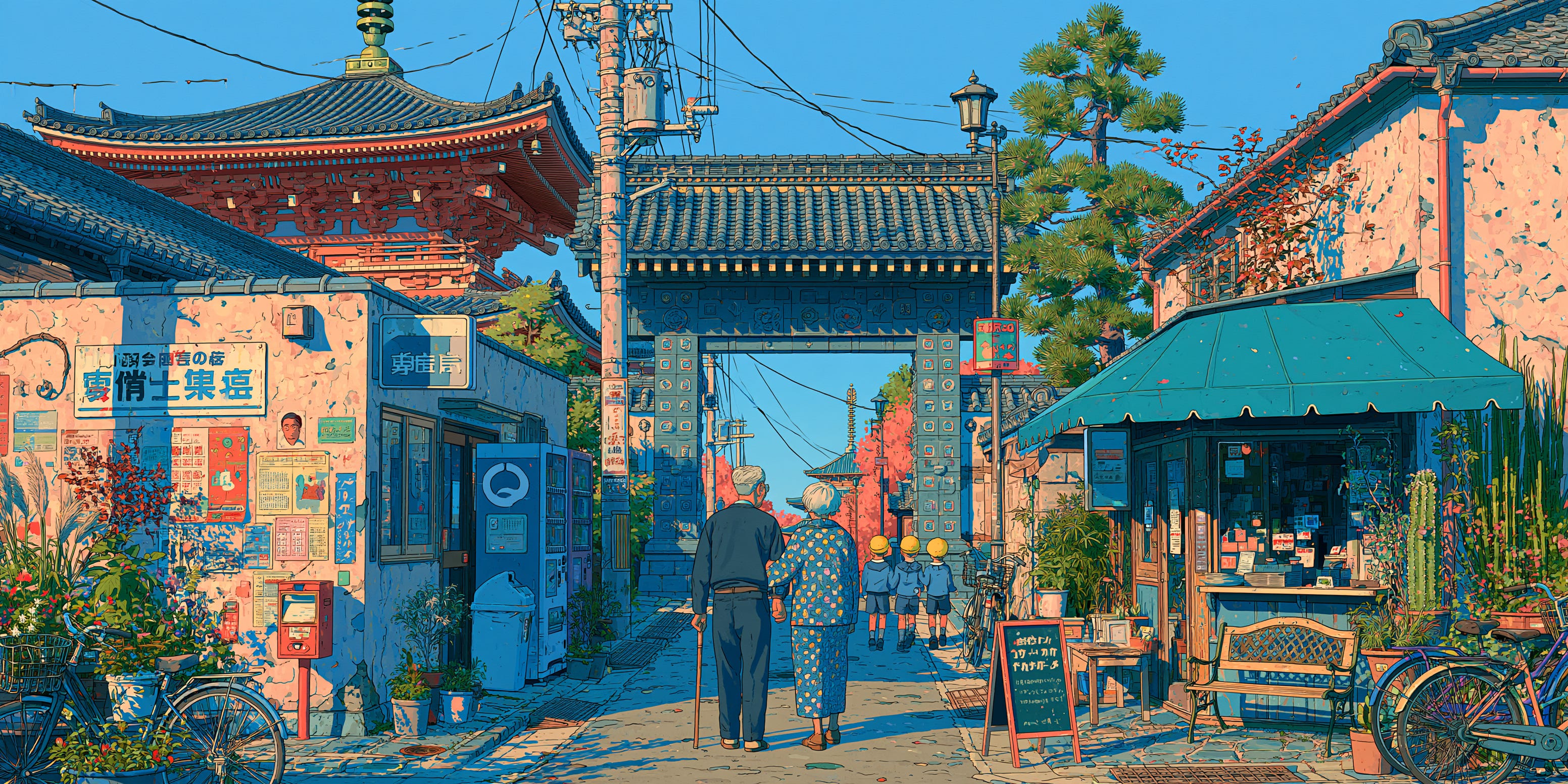
Moving your life is hard, and cheap houses don’t fix that. Since April 2026, foreign property buyers face new reporting rules, and the ruling coalition has said it will look at tighter limits. The language barrier is real, and indirect refusals can quietly stall a project for years. Bureaucracy is expensive and slow. Founders burn out. And exploring any of this takes a passport, savings, and remote work, which most people don’t have.
Rising interest rates add another layer. If borrowing gets more expensive and shrinking towns lose fiscal room, local governments could welcome outside money or grow more wary of it. I’m also wary of the network state movement’s own habits. A lot of talk about exit and sovereignty sounds, to a Japanese ear, like a threat. And nobody has yet proven a node here that works for foreigners and locals alike; people without flexible jobs and across the economic and political spectrum.

Neighbours Who Stay
My test for any of these places is simple: would my parents or grandparents want to live there, without caring about the ideology? That means walkable, safe streets, a clinic, a school, people their own age, temples, rituals, third spaces, and a move they could manage. Jane pushed back on my idea of these places as lifeboats for when institutions fail. People move when something is simply better and fits the logistics of their lives, crisis or not.
Jane also made a point about business that I keep thinking about. Communities that last usually attach themselves to something durable, and a business can be that vehicle if it’s built for continuity rather than scale. Japan already knows this better than anyone. It has more than 33,000 companies over a hundred years old, the shinise, and one construction firm, Kongō Gumi, traces its roots to the year 578. Their philosophy is to protect the core, avoid debt, keep relationships, and outlast the crisis. Growth is optional. Continuity is the point.
So, is Japan ready for a network state?
It already has most of the parts, and it built many of them itself. What’s missing is the integral middle: people who understand business in collectivist-cohesion cultures. Who can cook, fix the plumbing, understand cultural nuance, and are still there throughout the economic, geological, and political cycles facing the land of the rising sun.
Japan doesn’t need a new kind of country, but it does need to reduce its bureaucracies, promote risk-taking, and adapt to the technological pace of the world, in ways that still fit in its unique cultural context.
In that delicate balance, perhaps it can invite new neighbours eager to assimilate, and plan to live and grow with the nation. The projects that work here won’t be the ones that scale fastest. They’ll be the ones built to last.

Sponsors:
YODL Pay - Go global. Pay local.
Spend stablecoins through local payment networks, so the shop gets paid in its own currency.
Amazing wrap up. Really appreciate the work that goes into these articles.